In today’s increasingly urbanized world, maximizing space within our homes and offices is paramount. Modern living often necessitates creative solutions to accommodate our belongings and lifestyles within smaller footprints. This exploration delves into innovative techniques and strategies for optimizing space, from clever furniture designs and efficient storage solutions to the strategic use of light, color, and architectural elements. We’ll examine how multifunctional furniture, vertical storage, and minimalist principles can transform even the smallest areas into functional and aesthetically pleasing environments.
The following discussion will cover a range of practical approaches, including detailed examples and actionable advice to help you effectively utilize every square inch of your space. Whether you’re tackling a cramped apartment, a small kitchen, or a cluttered office, these techniques offer adaptable solutions for creating a more comfortable and organized living space.
Architectural and Design Strategies
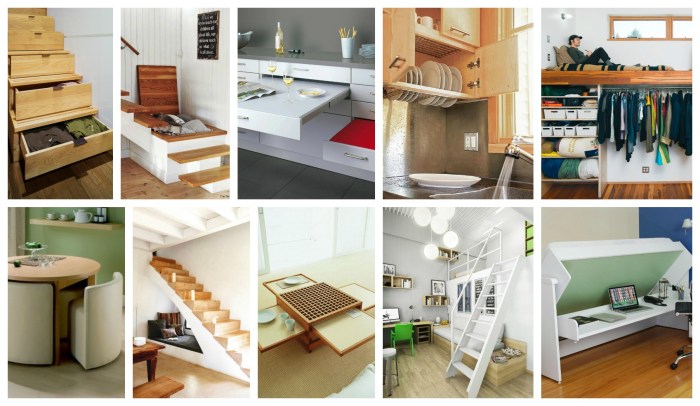
Effective architectural and design strategies play a crucial role in maximizing the perceived and actual space within smaller dwellings. By carefully considering elements like natural light, color palettes, and spatial arrangement, designers can significantly enhance the feeling of openness and functionality, even in compact living areas.
Impact of Natural Light and Color Palettes on Space Perception
The strategic use of natural light and carefully chosen color palettes dramatically influences how spacious a room feels. Maximizing natural light sources, such as windows and skylights, is paramount. Light, bright colors, particularly whites, creams, and pastels, reflect light effectively, making a room appear larger and airier. Conversely, darker colors absorb light, visually shrinking the space. For instance, a small bedroom painted in a soft, light gray will feel significantly more spacious than one painted a deep navy blue.
Using light-colored furniture and flooring further reinforces this effect. In contrast, a room with limited natural light might benefit from strategically placed mirrors to reflect existing light sources, creating the illusion of more brightness and therefore, more space. Consider a small living room with a north-facing window; light-colored walls and a strategically placed mirror opposite the window will bounce light throughout the room, significantly improving the sense of spaciousness.
Open-Plan Layouts Versus Compartmentalized Layouts
Open-plan layouts, which minimize interior walls and create a continuous flow between different areas, generally maximize space efficiency. This design allows for a sense of greater volume and can be particularly beneficial in smaller homes. However, compartmentalized layouts, while potentially reducing the sense of spaciousness, offer greater privacy and defined functional zones. The optimal choice depends on individual needs and preferences.
A studio apartment with an open-plan layout offers maximum flexibility and a sense of openness, while a small house with separate rooms might better suit a family seeking privacy for different activities like sleeping, working, and relaxing. The efficiency of each layout is relative to the needs of the occupants. A well-designed open-plan space can be highly efficient, but poor planning can lead to a chaotic and unfunctional space.
Conversely, a well-planned compartmentalized layout can be equally efficient by dedicating specific areas to particular functions.
Strategic Use of Mirrors and Reflective Surfaces
Mirrors are remarkably effective tools for creating the illusion of greater space. Strategically placed mirrors can visually double the size of a room, particularly when positioned to reflect a window or other light source. Larger mirrors have a more significant impact than smaller ones. For instance, a large mirror placed on a wall opposite a window will reflect the outdoor view, effectively expanding the perceived depth of the room.
A full-length mirror in a small hallway not only serves a practical purpose but also creates the illusion of length and openness. Similarly, reflective surfaces like polished metal or glass furniture can subtly enhance this effect. A small living room with a glass coffee table and strategically placed mirrors will feel more spacious and open than one with solid, dark furniture.
The key is to use mirrors to reflect light and visually extend the space, rather than simply using them as decorative elements.
Space Enhancer and Space Saving Techniques
Effective space management is crucial for maximizing the functionality and comfort of any living or working environment. This section explores innovative products, design principles, and practical strategies for enhancing space and optimizing storage solutions in homes and offices. We’ll examine how mindful choices in furniture, organization, and spatial arrangement can significantly improve the perceived and actual size of a room.
Innovative Space-Saving Products
The market offers a wide array of products designed to maximize space utilization. These range from cleverly designed furniture to sophisticated storage solutions. The following table categorizes some of these products based on their function, price range, and space-saving benefits.
| Function | Product Example | Price Range | Space-Saving Benefits |
|---|---|---|---|
| Storage | Foldable storage cubes | $20-$100 | Provides modular storage, easily collapsible when not in use, maximizes vertical space. |
| Furniture | Murphy bed | $500-$2000+ | Transforms from a bed to a wall-mounted unit, freeing up floor space during the day. |
| Organization | Under-bed storage containers | $15-$50 | Utilizes often-unused space under beds for storing seasonal items or extra bedding. |
| Kitchen | Pull-out pantry shelves | $50-$200+ | Maximizes pantry space by utilizing vertical and often-wasted corner space. |
| Bathroom | Over-the-toilet storage unit | $30-$150 | Adds storage space without taking up valuable floor space in a small bathroom. |
Minimalism and Decluttering for Space Maximization
The principles of minimalism and decluttering are fundamental to effective space management. By consciously reducing the number of possessions and adopting a minimalist approach to storage, individuals can significantly enhance the feeling of spaciousness in their homes or offices. Decluttering involves systematically identifying and removing unnecessary items, freeing up space and reducing visual clutter. This approach fosters a more organized and calming environment.
Regular purging of unused items and the adoption of a “one in, one out” policy can prevent future clutter accumulation.
Vertical Space Optimization in Different Home Areas
Vertical space optimization is a powerful strategy for maximizing usable area in any room. By effectively utilizing wall space and height, it is possible to significantly increase storage capacity without sacrificing floor space.
Here are some examples of vertical space optimization in different areas of a home:
- Kitchen:
- Install tall, narrow cabinets to maximize vertical space.
- Use stackable containers and organizers for pantry items.
- Mount pot racks or magnetic strips on walls to store cookware and utensils.
- Bathroom:
- Install floating shelves above the toilet or sink for toiletries and towels.
- Utilize over-the-door organizers for extra storage.
- Use vertical space inside cabinets with stackable drawers or shelves.
- Bedroom:
- Install tall bookshelves or wardrobes to maximize wall space.
- Use under-bed storage containers for seasonal clothing or extra linens.
- Opt for a bed with built-in drawers for additional storage.
Ultimately, maximizing space is not just about cramming more into a smaller area; it’s about creating a functional and aesthetically pleasing environment that reflects your lifestyle and preferences. By strategically implementing the space-saving techniques discussed—from smart furniture choices and efficient storage systems to the artful application of light and color—you can transform even the most compact spaces into comfortable, organized, and visually appealing havens.
The key is a thoughtful and holistic approach, combining creativity with practical solutions to achieve the desired results.
FAQ Resource
What are some inexpensive space-saving solutions?
Repurposing existing containers for storage, using vertical space with shelves, and decluttering regularly are cost-effective ways to save space.
How can I make my small bedroom feel larger?
Light, bright colors, mirrors strategically placed to reflect light, and minimizing clutter can significantly enhance the feeling of spaciousness.
Are there space-saving solutions for kitchens?
Yes, consider pull-out shelves, vertical organizers for spices and pantry items, and using the space above cabinets for storage.
How do I choose the right space-saving furniture?
Prioritize multifunctional pieces, consider the material and construction for durability, and measure your space carefully before purchasing.


