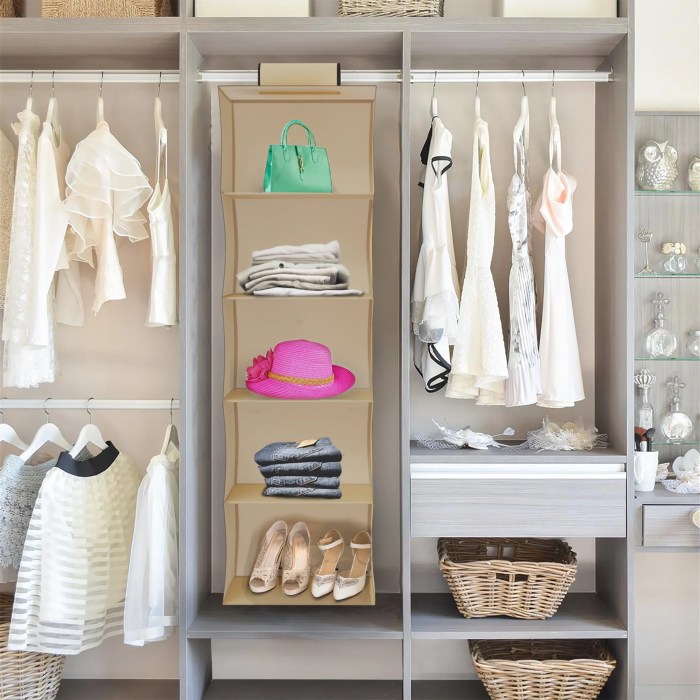
Transforming a cluttered closet into a haven of organized efficiency is a goal many strive for. This guide delves into the world of space-saving closet organizers, exploring various types, techniques, and considerations to help you reclaim your closet space. We’ll examine practical solutions, from clever shelf arrangements to efficient folding methods, offering a comprehensive approach to maximizing storage and minimizing chaos.
Whether you’re dealing with a small walk-in closet or a cramped reach-in, understanding the principles of efficient storage and employing the right organizers can make a significant difference. This guide provides a practical roadmap to achieving a more organized and functional closet, improving both the aesthetics and usability of your storage space.
Optimizing Shelf Space
Maximizing shelf space in your closet requires a strategic approach combining smart organization techniques and the right storage solutions. Efficient shelf organization not only increases storage capacity but also enhances accessibility and simplifies the process of finding items. This leads to a more streamlined and less stressful experience when getting ready in the morning or searching for a specific item.
Effective shelf organization hinges on a combination of careful categorization, the strategic use of dividers and containers, and an understanding of how to optimize vertical space. By implementing these strategies, you can transform a cluttered, disorganized shelf into a well-organized and efficient storage area.
Step-by-Step Guide to Efficient Shelf Organization
- Clear the Shelf: Begin by removing all items from the shelf. This allows for a thorough cleaning and provides a blank canvas for reorganization.
- Clean the Shelf: Wipe down the shelf to remove dust and debris. A clean shelf provides a fresh start and helps maintain a cleaner overall closet environment.
- Categorize Items: Sort items into categories based on type and frequency of use. (See detailed categorization below).
- Implement Dividers: Use shelf dividers to create separate compartments for different categories of items. This prevents items from toppling over and maximizes space utilization.
- Utilize Stackable Containers: Stackable containers are ideal for storing smaller items, maximizing vertical space and keeping items organized. Clear containers allow for easy identification of contents.
- Arrange Items: Place frequently used items within easy reach, while less frequently used items can be stored higher up or further back.
- Regular Maintenance: Periodically review and reorganize your shelves to maintain efficiency and prevent clutter from accumulating.
Categorizing Items for Optimal Shelf Placement
Categorizing items based on usage frequency and size is crucial for efficient shelf organization. This ensures that frequently used items are readily accessible, while less frequently used items are stored in a way that doesn’t impede access to the more important ones.
- Frequency of Use: Group items by how often you use them. Place frequently used items on easily accessible shelves, while less frequently used items can be stored higher or further back.
- Item Size and Shape: Organize items by size and shape to maximize space utilization. Similar-sized items can be grouped together to create a more compact and visually appealing arrangement.
- Item Type: Group similar items together. For example, all your sweaters could be in one section, while shirts are in another. This makes finding specific items much easier.
Benefits of Using Clear Storage Containers
Using clear storage containers offers significant advantages in maximizing shelf visibility and organization. The ability to see the contents of each container eliminates the need for extensive searching and labeling, streamlining the process of retrieving items.
- Easy Identification: Clear containers allow you to see the contents at a glance, eliminating the need to rummage through multiple boxes or containers.
- Improved Organization: They help maintain a neat and tidy appearance, making your closet look more organized and less cluttered.
- Space Saving: Stackable clear containers optimize vertical space, allowing you to store more items in the same amount of space.
Examples include clear plastic bins for folded clothes, shoe boxes with clear lids for footwear, and small clear containers for accessories like jewelry or belts. These containers can be further customized with labels if needed, but the transparency itself often negates this need.
Space Saving Techniques Beyond Organizers
Maximizing closet space often involves more than just employing organizers. Strategic thinking and practical adjustments to your storage and clothing habits can significantly increase available space. This section explores several techniques that go beyond the use of traditional closet organizers to achieve a more efficient and spacious closet.
Efficient Clothing Folding Techniques
Proper folding techniques are crucial for maximizing vertical space within drawers and on shelves. Different methods offer varying degrees of space-saving efficiency, allowing you to store more garments in the same area.
- The KonMari Method: This method involves folding clothes into rectangular shapes, standing them upright in drawers. This allows for easy visibility and access to each item, while maximizing vertical space utilization. Imagine a drawer filled with neatly folded shirts, each standing upright like a file in a cabinet; this maximizes space by eliminating wasted gaps.
- The Rolling Method: This technique involves tightly rolling clothes into cylinders, which is particularly effective for softer items like t-shirts and sweaters. Rolling reduces wrinkles and saves space compared to traditional folding. Picture tightly rolled clothes resembling small logs, stacked neatly side-by-side in a drawer.
- File Folding: Similar to the KonMari method, this technique involves folding clothes into thirds or quarters and then filing them vertically in drawers or on shelves. This is especially useful for items like jeans and pants, keeping them wrinkle-free and easily accessible. Imagine a drawer with pairs of neatly folded pants standing upright, easily identifiable and readily available.
Items to Remove from the Closet to Free Up Space
Decluttering is a key component of maximizing closet space. Regularly reviewing your belongings and removing unnecessary items can create significant space.
- Out-of-Season Clothing: Storing off-season clothes in vacuum-sealed bags or bins under the bed or in another storage area frees up significant closet space. This is especially beneficial in smaller closets where space is limited. For example, winter coats and heavy sweaters can be stored away during summer months.
- Items You No Longer Wear: Clothes that haven’t been worn in a year, don’t fit properly, or are damaged should be donated, sold, or discarded. This is crucial for maintaining a functional and organized closet. Consider items that are outdated or no longer reflect your style.
- Excess Accessories: Overly numerous belts, scarves, or jewelry can easily clutter a closet. Consider donating or storing excess accessories in other locations, freeing up valuable hanging and shelf space. For example, less frequently used jewelry can be stored in a jewelry box outside the closet.
- Shoes You Rarely Wear: Shoes take up a considerable amount of space. Remove rarely worn pairs and store them elsewhere, such as in shoe racks under the bed or in a separate storage area. This applies to seasonal footwear as well.
- Broken or Damaged Items: Repairing or discarding broken or damaged items frees up space and eliminates clutter. This includes clothes with holes, broken hangers, or malfunctioning organizers. This proactive approach prevents unnecessary clutter build-up.
Utilizing Vertical Space
Often overlooked, vertical space offers significant storage potential. Utilizing this space effectively can greatly enhance storage capacity.
Installing shelves higher up in the closet, using shelf risers to create multiple levels on existing shelves, and hanging clothes vertically using space-saving hangers allows for more efficient use of the available vertical space. Think of creating a multi-tiered storage system that makes use of the often-unused space above the reach of standard hanging rods. This approach significantly increases capacity without taking up additional floor space.
Strategic Placement of Items
Consider the frequency of use when deciding where to store items. Frequently used items should be placed in easily accessible areas, while less frequently used items can be stored higher up or in less convenient locations.
This approach optimizes workflow and makes finding items quicker and easier. For example, everyday clothes should be kept at eye level and easily reachable, while seasonal items can be placed on higher shelves or in less accessible areas. This reduces time spent searching for items and maximizes the efficiency of your closet.
Space Saving Considerations
Effective closet organization hinges on understanding and adapting to the unique characteristics of your storage space. Careful consideration of your closet’s dimensions and shape, coupled with precise measurements, will significantly impact the success of your space-saving endeavors. Failing to account for these factors can lead to purchasing organizers that are either too large or too small, ultimately hindering your organizational efforts.
Closet Size and Shape Impact on Organizer Selection
The size and shape of your closet directly influence the type and number of organizers you can effectively utilize. Understanding this relationship is crucial for maximizing storage potential.
- Small Closets: Small closets benefit from slimline organizers, vertical storage solutions, and multi-functional pieces. Avoid bulky items that will overwhelm the space.
- Large Closets: Larger closets offer more flexibility, allowing for a wider array of organizers, including larger drawers, shelves, and even dedicated hanging sections for different clothing types.
- Irregularly Shaped Closets: Closets with unusual shapes or awkward corners require custom solutions or creative use of space-filling organizers. Consider utilizing corner shelves or custom-built shelving units.
- Reach-In Closets: Reach-in closets often benefit from maximizing vertical space with hanging organizers and shelf dividers. The depth of the closet will also dictate the type of hanging rods and shelving that can be used.
- Walk-In Closets: Walk-in closets provide more opportunities for elaborate organization systems, including islands, drawers, and specialized storage for shoes, accessories, and other items. Zone the space for different clothing types or activities.
Measuring Your Closet for Accurate Organizer Selection
Accurately measuring your closet before purchasing organizers is paramount to ensuring a perfect fit and maximizing storage efficiency. Improper measurements can lead to wasted space, ineffective organization, and even the need to return purchased items.
- Height: Measure the height of your closet from the floor to the ceiling. Note any obstructions such as beams or slanted ceilings.
- Width: Measure the width of your closet at its widest point. This measurement will determine the maximum width of shelving or organizers you can use.
- Depth: Measure the depth of your closet from the back wall to the front edge. This is crucial for selecting hanging rods and shelving that will fit comfortably.
- Door Width and Height: Measure the width and height of your closet doors, especially if you plan on using over-the-door organizers.
- Obstructions: Note any obstructions within the closet, such as pipes, electrical outlets, or existing fixtures. These will impact the placement and size of organizers.
- Record Measurements: Carefully record all measurements, including any notes about obstructions, on paper or digitally. This will be essential when comparing organizer dimensions.
Adapting Space-Saving Solutions for Different Clothing Types
Different clothing items require different storage solutions to maximize space and maintain organization. The following table Artikels effective strategies for various clothing types:
| Clothing Type | Space-Saving Solutions | Example | Image Description (Placeholder) |
|---|---|---|---|
| Dresses | Dress bags, cascading hangers, full-length garment racks | Using cascading hangers to maximize space on a single rod. | A visual representation showing several dresses hanging neatly on cascading hangers, showcasing the increased space efficiency compared to using standard hangers. |
| Shirts | Folding techniques (e.g., KonMari method), shelf dividers, drawer organizers | Utilizing shelf dividers to separate folded shirts neatly on a shelf. | A picture showing a shelf with neatly stacked folded shirts, separated by dividers, maximizing visibility and preventing piles from collapsing. |
| Pants | Pant hangers, vertical storage solutions, drawer organizers with dividers | Using pant hangers to keep pants wrinkle-free and visible. | An image depicting a closet rod with several pairs of pants neatly organized on pant hangers, demonstrating efficient space utilization and easy accessibility. |
| Sweaters | Folding techniques, shelf dividers, drawer organizers | Using drawer dividers to keep sweaters separated and prevent them from getting compressed. | A photo illustrating a drawer with folded sweaters neatly organized within dividers, showcasing the organized appearance and preventing wrinkles. |
By implementing the strategies and techniques Artikeld in this guide, you can significantly increase your closet’s storage capacity and create a more organized and efficient space. Remember, the key to success lies in careful planning, accurate measurements, and selecting the right organizers to suit your specific needs and closet dimensions. With a little effort and the right tools, you can conquer closet clutter and enjoy a more streamlined and functional wardrobe.
Question Bank
Can I use space-saving organizers in closets with unusual shapes or sizes?
Yes, many organizers are adaptable. Customizable shelving and modular systems can often accommodate irregular spaces. Careful measurement is crucial to ensure a proper fit.
How often should I declutter my closet after implementing organizers?
Regular decluttering, ideally every 3-6 months, is recommended to maintain the efficiency of your organization system and prevent future clutter buildup.
What are some eco-friendly options for closet organizers?
Consider organizers made from bamboo, recycled plastic, or sustainably sourced wood. Look for brands committed to ethical and environmentally responsible manufacturing practices.
Are there any DIY space-saving closet organizer options?
Yes, many simple organizers can be created using readily available materials like repurposed boxes, shelves, and fabric. Online resources offer numerous DIY tutorials.


